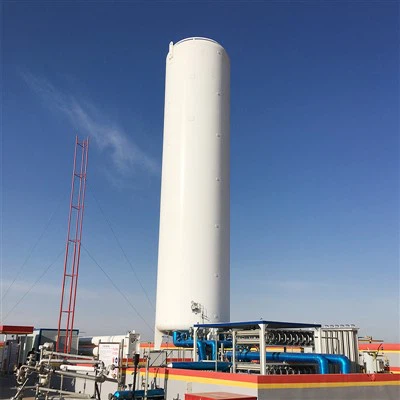
Hey there! I'm a supplier for LNG Fuel Stations, and today I'm gonna share with you how these stations actually generate revenue.
1. Selling LNG Fuel
The most obvious way LNG Fuel Stations make money is by selling LNG fuel. Just like traditional gas stations sell gasoline and diesel, LNG stations offer liquefied natural gas to vehicles that are designed to run on it. There's a growing demand for LNG as a fuel source, especially in the transportation industry. Trucks, buses, and some marine vessels are increasingly turning to LNG because it's cleaner and often more cost - effective than traditional fuels.
When a customer pulls into an LNG Fuel Station to fill up their tank, they pay for the amount of LNG they purchase. The price of LNG is usually set based on a combination of factors. First, there's the cost of procuring the LNG itself. The station has to buy the LNG from suppliers, and this cost can fluctuate depending on market conditions, such as the global supply and demand for natural gas. Then, there are the operational costs of the station, like staff salaries, maintenance of the equipment, and utility bills. The station needs to cover these costs and make a profit, so they add a markup to the price of the LNG they sell.
For example, if the cost of procuring LNG is $X per gallon and the operational costs associated with selling that gallon amount to $Y, the station will set a selling price of $X + $Y+ a profit margin. This profit margin can vary depending on the competition in the area. In a highly competitive market, stations might have a smaller profit margin to attract more customers, while in a less competitive area, they can afford to have a slightly higher one.
2. Service Fees
Apart from selling LNG, many LNG Fuel Stations also charge service fees. These fees can cover a variety of services. One common service fee is for the use of the refueling equipment. The equipment at an LNG station is specialized and requires regular maintenance and calibration to ensure it dispenses the correct amount of fuel accurately. To cover these costs, stations might charge a small service fee per refueling transaction.
Another type of service fee could be for additional services like tank cleaning. Over time, the LNG tanks in vehicles can accumulate impurities, and regular cleaning is necessary to maintain the performance and safety of the vehicle's fuel system. Some LNG stations offer tank - cleaning services and charge a fee for this. It's a win - win situation. The station generates additional revenue, and the vehicle owners get a necessary service that helps keep their vehicles in good working condition.
3. Partnerships and Advertising
LNG Fuel Stations can also generate revenue through partnerships and advertising. They can partner with vehicle manufacturers or LNG equipment suppliers. For instance, a station might partner with a truck manufacturer that promotes its LNG - powered trucks. In return for promoting the manufacturer's vehicles, the station could receive a commission for every truck sold to a customer who refuels at their station.
Advertising is another great source of income. The station can lease out advertising space on its premises. This could be on the exterior walls of the station building, on the fuel pumps, or even on the signage around the station. Companies that are related to the transportation or energy industry, such as tire manufacturers, lubricant suppliers, or other energy companies, might be interested in advertising at an LNG station. They can reach a targeted audience of vehicle owners who are already interested in alternative fuels.
4. Offering Value - Added Products
Some LNG Fuel Stations go a step further and offer value - added products. For example, they might sell LNG - related accessories like fuel filters, hoses, or safety equipment. These products are essential for the proper functioning and safety of LNG - powered vehicles. By offering these products at their stations, they can generate additional revenue.
They could also offer convenience items like snacks, drinks, and basic automotive supplies. Just like at a traditional gas station, customers who stop to refuel might also want to grab a quick snack or pick up a bottle of water. By providing these items, the station can increase its overall revenue per customer visit.
5. Expansion and Diversification
As an LNG Fuel Station supplier, I've seen many stations expand and diversify their operations to generate more revenue. Some stations upgrade to a LNG Refuelling Station that can serve a wider range of vehicles, including larger trucks and marine vessels. This allows them to tap into new markets and increase their customer base.
Others invest in Compact LNG Refueling Station technology. These compact stations are more portable and can be set up in areas where traditional stations might not be feasible. They can be used for temporary events or in remote locations, opening up new revenue streams.
Conclusion
In conclusion, LNG Fuel Stations have multiple ways to generate revenue. From selling LNG fuel and charging service fees to forming partnerships, advertising, offering value - added products, and expanding their operations, there are plenty of opportunities for these stations to make money.


If you're in the market for an LNG Fuel Station or looking to upgrade your existing one, I'd love to talk to you. Whether you're interested in the latest technology, need help with station design, or want to discuss revenue - generating strategies, I'm here to assist. Reach out to me, and let's start a conversation about how we can work together to make your LNG Fuel Station a success.
References
- Energy Information Administration reports on natural gas market trends.
- Industry publications on alternative fuels and transportation.
- Case studies of successful LNG Fuel Stations.