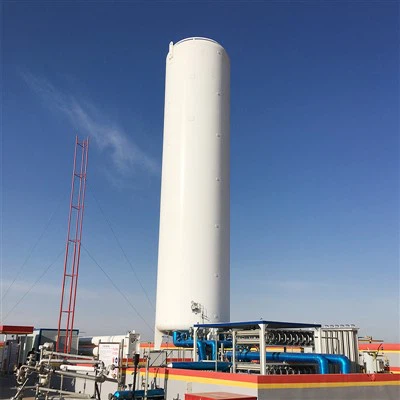
Hey there! As a supplier of LNG refuelling stations, I've been in the thick of this industry for quite some time. And let me tell you, an LNG refuelling station is like a well - oiled machine, made up of several key components that work together seamlessly. In this blog, I'm gonna break down these components for you.
1. LNG Storage Tanks
First off, we've got the LNG storage tanks. These are the heart of the refuelling station. LNG, or liquefied natural gas, is stored at extremely low temperatures (-162°C or -260°F). The storage tanks need to be super well - insulated to keep the LNG in its liquid state. They come in different sizes, depending on the station's capacity. Smaller stations might have tanks that can hold a few thousand gallons, while larger ones can store tens of thousands.
These tanks are built to be really sturdy. They're made of special materials that can withstand the cold and the pressure. And safety is a huge deal here. There are all sorts of safety features, like pressure relief valves. If the pressure inside the tank gets too high, these valves open up to let out some gas and prevent any dangerous situations.
2. LNG Fueling Pump Skid
Next on the list is the LNG Fueling Pump Skid. This is where the action starts when it comes to getting the LNG from the storage tank to the vehicle. The pump skid is basically a compact unit that houses all the pumps, valves, and controls needed to transfer the LNG.
The pumps in the skid are designed to handle the cold and the high - pressure requirements of LNG. They need to be really efficient to pump the LNG quickly and accurately. The valves in the skid control the flow of the LNG. They can open and close to start and stop the transfer, and also regulate the amount of LNG being pumped.
The control system in the pump skid is like the brain. It monitors things like the pressure, temperature, and flow rate of the LNG. It makes sure everything is working properly and can shut down the system if there's a problem.


3. LNG Dispenser
Now, let's talk about the LNG Dispenser. This is what the customers actually interact with. It's similar to a gasoline dispenser at a regular gas station, but for LNG.
The dispenser has a hose that connects to the vehicle's LNG tank. It has a nozzle at the end of the hose that seals tightly to the vehicle's filling port to prevent any leaks. There's also a display on the dispenser that shows things like the amount of LNG being dispensed and the cost.
Dispensers are designed to be user - friendly. They have simple controls that the driver can use to start and stop the filling process. And of course, they're built to be safe. There are sensors that can detect if there's a leak or if something goes wrong during the filling, and they'll shut off the dispenser right away.
4. Vaporizers
Vaporizers are another important component. When LNG is stored in the tank, it's in a liquid state. But before it can be used in some engines, it needs to be turned back into a gas. That's where the vaporizers come in.
There are different types of vaporizers. Some use ambient air to heat the LNG and turn it into gas. Others use water or other heat sources. The vaporizers need to be able to handle the flow rate of the LNG and turn it into gas quickly and efficiently.
5. Control and Monitoring Systems
A modern LNG refuelling station wouldn't be complete without a good control and monitoring system. This system keeps an eye on everything in the station, from the storage tanks to the dispensers.
It monitors things like temperature, pressure, and flow rates. If any of these parameters go out of the normal range, the system can send out an alarm. It can also shut down parts of the station or the whole thing if necessary to prevent any damage or safety issues.
The control and monitoring system can be accessed remotely. That means the station operators can check on the status of the station from anywhere, using a computer or a mobile device. This makes it easier to manage the station and respond quickly to any problems.
6. Safety Equipment
Safety is always the top priority in an LNG refuelling station. There's a whole bunch of safety equipment in place.
There are fire suppression systems. These can be sprinklers or other types of fire - fighting equipment. They're designed to quickly put out any fires that might start in the station.
Gas detectors are also very important. They can detect if there's any LNG gas leaking in the air. If they detect a leak, they'll trigger an alarm and can also shut down parts of the station to prevent the spread of the gas.
Emergency shutdown buttons are located throughout the station. In case of an emergency, anyone in the station can press these buttons to shut down the whole operation and prevent any further danger.
7. LNG All - in - one Filling Station
For some customers, an LNG All - in - one Filling Station might be the way to go. These are self - contained units that combine all the key components I've talked about into one compact package.
They're great for smaller locations or for customers who want a quick and easy installation. The all - in - one stations are pre - fabricated and can be set up relatively quickly. They still have all the safety features and functionality of a larger, more traditional LNG refuelling station.
So, there you have it, the key components of an LNG refuelling station. Each one plays a crucial role in making sure the station works safely and efficiently.
If you're in the market for an LNG refuelling station or any of its components, I'd love to have a chat with you. Whether you're looking for a small all - in - one station or a large, custom - built one, I can help you find the right solution for your needs. Just reach out, and we can start the procurement and negotiation process.
References
- Industry standards and guidelines for LNG refuelling stations.
- Manufacturer's specifications for LNG storage tanks, pumps, dispensers, etc.