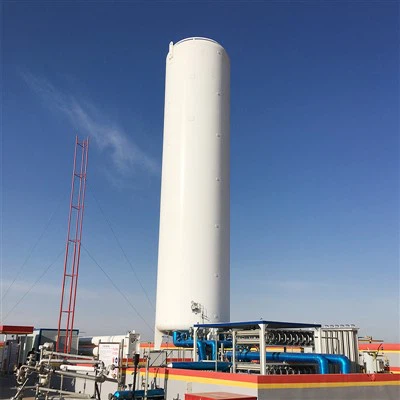
Hey there! As a supplier of Ammonia Cracker Equipment, I often get asked about the pay - back period of investing in this kind of equipment. In this blog, I'm gonna break it down for you and give you the lowdown on what to expect when you decide to take the plunge and invest in ammonia cracker equipment.
First off, let's quickly go over what ammonia cracker equipment does. Ammonia cracker equipment is designed to break down ammonia (NH₃) into hydrogen (H₂) and nitrogen (N₂). Hydrogen is a super - valuable gas with a ton of applications, like in fuel cells, refining processes, and even in the emerging hydrogen economy. By cracking ammonia, you can produce high - purity hydrogen on - site, which can save you a whole lot of money in the long run compared to buying hydrogen from external suppliers.
Now, the pay - back period of any investment depends on a bunch of factors. The first and most obvious one is the cost of the ammonia cracker equipment itself. The price can vary widely depending on the size, capacity, and features of the equipment. A small - scale ammonia cracker for a research lab might cost a few thousand bucks, while a large - scale industrial - grade one can run into hundreds of thousands or even millions of dollars.
Another big factor is the cost of ammonia. Ammonia is relatively inexpensive compared to other hydrogen - containing compounds, but its price can still fluctuate based on market conditions, production costs, and supply and demand. If you can secure a long - term supply of ammonia at a good price, it'll definitely help shorten the pay - back period.
The amount of hydrogen you can produce and sell is also crucial. If you've got a high - demand market for the hydrogen you're producing, and you can sell it at a good price, you'll recoup your investment much faster. For example, if you're supplying hydrogen to a local fuel cell vehicle station, and there's a growing number of fuel cell cars in the area, you're likely to see a quicker return on your investment.
Let's look at some real - world scenarios to get a better idea of the pay - back period. Suppose you're a small - to - medium - sized business that decides to invest in an ammonia cracker with a moderate capacity. The equipment costs you around $100,000. You're able to source ammonia at a reasonable price of $500 per ton, and you can produce and sell hydrogen at $5 per kilogram.


Let's assume your ammonia cracker has an efficiency of around 80%, which means for every ton of ammonia you crack, you can produce about 111 kilograms of hydrogen. If you operate the cracker for 20 hours a day, 300 days a year, and it can process 1 ton of ammonia per day, you'll produce about 33,300 kilograms of hydrogen per year. At $5 per kilogram, your annual revenue from selling hydrogen will be $166,500.
The cost of ammonia for this production level will be $150,000 per year (300 tons at $500 per ton). You also have to account for operating costs, like electricity, maintenance, and labor. Let's say these additional costs amount to $20,000 per year. So your net annual profit is $166,500 - $150,000 - $20,000 = $ - 3,500 in the first year. But remember, you've made a one - time investment of $100,000 in the equipment.
As you continue to operate, the situation will improve. Over time, as you pay off the initial investment and get better at optimizing your production process, your profit margins will increase. In this case, it might take you around 3 - 5 years to fully recoup your investment, depending on how well you manage your costs and sales.
For larger - scale operations, the pay - back period can be different. A large industrial ammonia cracker might cost $1 million or more. But because of economies of scale, the cost per unit of hydrogen production is usually lower. If you can produce and sell hydrogen on a much larger scale, say 100 tons per day, and you've got a stable market for it, you might be able to recoup your investment in 2 - 3 years.
Now, let's talk about some of the technologies related to ammonia cracker equipment that can affect the pay - back period. There are advanced purification technologies that can ensure you produce high - purity hydrogen, which can command a higher price in the market. For example, the Hydrogen Purification System can help you remove impurities from the hydrogen produced by the ammonia cracker, making it suitable for more demanding applications like fuel cells.
Another important technology is the Deep Cold Air Separation Technology. This can be used in conjunction with ammonia cracker equipment to produce high - purity nitrogen, which can be sold as a by - product. Selling nitrogen can add an extra revenue stream and help shorten the pay - back period.
The Industrial Co Purification Technology and Equipment is also useful if you're dealing with ammonia that has some carbon monoxide impurities. By purifying the gas stream, you can improve the quality of the hydrogen produced and potentially increase its market value.
In conclusion, the pay - back period of investing in ammonia cracker equipment can vary widely depending on multiple factors. It could be anywhere from 2 - 5 years for most commercial operations, but it really boils down to how well you manage your costs, production, and sales.
If you're thinking about investing in ammonia cracker equipment, I'd love to have a chat with you. We can discuss your specific needs, do some cost - benefit analysis, and figure out the best solution for your business. Whether you're a small start - up or a large industrial player, we've got the expertise and the equipment to help you succeed in the hydrogen production game. Don't hesitate to reach out and start the conversation about purchasing ammonia cracker equipment for your operation.
References
- Various industry reports on hydrogen production and ammonia cracker technology
- Market research on ammonia and hydrogen prices