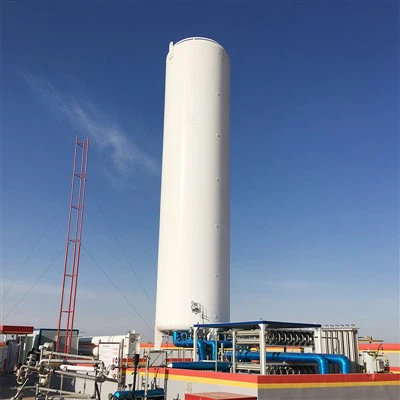
In the realm of clean energy and industrial gas production, ammonia cracker equipment plays a pivotal role. As a leading supplier of Ammonia Cracker Equipment, I understand the significance of real - time monitoring for the efficient and safe operation of this equipment. In this blog, I will share some insights on how to monitor the operation of ammonia cracker equipment in real - time.
Understanding the Ammonia Cracker Equipment
Before delving into real - time monitoring, it's essential to have a basic understanding of ammonia cracker equipment. Ammonia crackers are designed to break down ammonia (NH₃) into hydrogen (H₂) and nitrogen (N₂) through a catalytic reaction. This process typically occurs at high temperatures, usually around 800 - 900°C. The hydrogen produced can be used in various applications, such as fuel cells, chemical synthesis, and metal heat treatment, while the nitrogen can be utilized in inert gas applications.
Key Parameters for Real - Time Monitoring
Temperature
Temperature is one of the most critical parameters in an ammonia cracker. The catalytic reaction that breaks down ammonia is highly temperature - dependent. If the temperature is too low, the reaction rate will be slow, resulting in incomplete ammonia decomposition. On the other hand, if the temperature is too high, it can cause damage to the catalyst and other components of the equipment.
To monitor temperature in real - time, thermocouples or resistance temperature detectors (RTDs) can be installed at multiple points within the cracker. These sensors can provide continuous temperature readings, which can be transmitted to a control system. The control system can then compare the actual temperature with the setpoint and adjust the heating system accordingly.
Pressure
Pressure monitoring is also crucial for the safe operation of ammonia cracker equipment. The pressure inside the cracker can affect the reaction kinetics and the flow of gases. Abnormal pressure fluctuations can indicate issues such as blockages in the gas lines, leaks, or problems with the compressor.
Pressure sensors, such as strain - gauge pressure transducers, can be installed at different locations in the cracker, including the inlet and outlet of the reactor, as well as the gas storage tanks. These sensors can measure the pressure and send the data to the control system. If the pressure exceeds the safe operating range, the control system can trigger an alarm and take appropriate actions, such as shutting down the equipment.
Gas Composition
Monitoring the composition of the gases produced by the ammonia cracker is essential to ensure the quality of the hydrogen and nitrogen output. Gas analyzers can be used to measure the concentrations of ammonia, hydrogen, and nitrogen in the gas stream.
There are several types of gas analyzers available, such as infrared gas analyzers, thermal conductivity analyzers, and electrochemical sensors. These analyzers can provide real - time data on the gas composition, which can be used to optimize the operation of the cracker. For example, if the ammonia concentration in the output gas is too high, it may indicate that the reaction is not complete, and adjustments to the temperature or flow rate may be required.
Flow Rate
The flow rate of the ammonia feedstock and the output gases is another important parameter to monitor. The flow rate affects the residence time of the ammonia in the reactor, which in turn affects the reaction efficiency. If the flow rate is too high, the ammonia may not have enough time to react completely. If the flow rate is too low, it can lead to a decrease in production capacity.
Flow meters, such as mass flow meters or volumetric flow meters, can be installed in the gas lines to measure the flow rate. The flow rate data can be used to control the feed rate of ammonia and ensure a stable operation of the cracker.
Real - Time Monitoring Systems
To effectively monitor the operation of ammonia cracker equipment in real - time, a comprehensive monitoring system is required. This system typically consists of sensors, data acquisition units, a control system, and a human - machine interface (HMI).
Sensors
As mentioned earlier, sensors are used to measure various parameters such as temperature, pressure, gas composition, and flow rate. These sensors should be carefully selected based on the specific requirements of the ammonia cracker equipment. They should be accurate, reliable, and able to withstand the harsh operating conditions inside the cracker.
Data Acquisition Units
Data acquisition units (DAUs) are used to collect the data from the sensors and convert it into a digital format. The DAUs can also perform signal conditioning, such as amplification and filtering, to improve the quality of the data. The collected data is then transmitted to the control system via a communication network, such as Ethernet or Modbus.
Control System
The control system is the heart of the real - time monitoring system. It receives the data from the DAUs and compares it with the setpoints. Based on the comparison, the control system can make decisions and take actions to optimize the operation of the ammonia cracker. For example, it can adjust the heating system to maintain the desired temperature, control the flow rate of ammonia, or trigger an alarm in case of abnormal conditions.
Human - Machine Interface (HMI)
The HMI provides a user - friendly interface for operators to monitor and control the ammonia cracker equipment. It displays the real - time data from the sensors, such as temperature, pressure, and gas composition, in a graphical format. Operators can also use the HMI to set the operating parameters, view historical data, and perform diagnostic tests.
Benefits of Real - Time Monitoring
Real - time monitoring of ammonia cracker equipment offers several benefits, including:
Improved Safety
By continuously monitoring critical parameters such as temperature and pressure, real - time monitoring systems can detect potential safety hazards early and take preventive actions. This can help to prevent accidents such as explosions and leaks, protecting the operators and the environment.


Enhanced Efficiency
Real - time monitoring allows operators to optimize the operation of the ammonia cracker by adjusting the operating parameters based on the actual conditions. This can improve the reaction efficiency, reduce energy consumption, and increase the production capacity of the equipment.
Predictive Maintenance
By analyzing the historical data collected by the monitoring system, it is possible to predict when maintenance is required. This can help to schedule maintenance activities in advance, reducing downtime and maintenance costs.
Related Products and Their Role in the Process
In addition to ammonia cracker equipment, there are other related products that can play an important role in the hydrogen and nitrogen production process. For example, PSA for Nitrogen Generation can be used to purify the nitrogen produced by the ammonia cracker. PSA technology is based on the principle of pressure - swing adsorption, which can selectively adsorb impurities from the nitrogen gas stream, resulting in a high - purity nitrogen product.
Hydrogen Generation Device can also be used in combination with ammonia cracker equipment to produce hydrogen. These devices can use different methods, such as electrolysis or reforming, to generate hydrogen. They can be used to supplement the hydrogen production from the ammonia cracker or to produce hydrogen in a more flexible way.
Methanol Hydrogen Generator is another option for hydrogen production. Methanol can be reformed to produce hydrogen, and this process can be integrated with the ammonia cracker system to increase the overall hydrogen production capacity.
Conclusion
Real - time monitoring of ammonia cracker equipment is essential for ensuring its safe, efficient, and reliable operation. By monitoring key parameters such as temperature, pressure, gas composition, and flow rate, and using a comprehensive monitoring system, operators can optimize the performance of the equipment, improve safety, and reduce maintenance costs.
As a supplier of Ammonia Cracker Equipment, we are committed to providing our customers with high - quality equipment and comprehensive solutions for real - time monitoring. If you are interested in our products or have any questions about ammonia cracker equipment and its real - time monitoring, please feel free to contact us for further discussion and procurement negotiation. We look forward to working with you to meet your hydrogen and nitrogen production needs.
References
- Smith, J. (2020). Ammonia Cracking Technology: A Review. Journal of Energy and Chemical Engineering, 15(2), 45 - 56.
- Johnson, A. (2019). Real - Time Monitoring of Industrial Processes. Industrial Automation Magazine, 22(3), 78 - 85.
- Brown, C. (2021). Gas Analysis Techniques for Hydrogen Production. International Journal of Hydrogen Energy, 36(10), 6234 - 6245.